
Forensic Expert Witness Testimony in Canadian Courts: The R. v. Mohan Admissibility Test, Rule 52 Expert Reports & Cross-Examination Defense for Litigators

In high-stakes civil litigation, catastrophic personal injury trials, corporate fraud prosecutions, and criminal proceedings across Canada, trials rarely hinge on simple factual testimony. Instead, judicial outcomes depend on the credibility, scientific validity, and persuasiveness of expert opinion evidence. For trial lawyers appearing before the Court of King’s Bench of New Brunswick, the Supreme Court of Nova Scotia, and Canadian Federal Courts, securing accredited forensic expert witness testimony provides the definitive evidentiary weight required to prevail at trial. What Are the Legal Requirements for Forensic Expert Witness Testimony in Canadian Courts? Direct Answer: Canadian Forensic Expert Witness Admissibility To be admissible in Canadian courts, forensic expert witness testimony must satisfy the landmark Supreme Court of Canada four-part test established in R. v. Mohan [1994]: (1) logical and legal relevance, (2) necessity in assisting the trier of fact, (3) absence of any statutory or common law exclusionary rule, and (4) a properly qualified expert. Furthermore, under White Burgess Langille Inman v. Abbott and Haliburton Co. [2015], the expert owes an overriding, independent duty of impartiality to the court. Led by Fidèle St-Amand, FPI Agency provides trial lawyers with unshakeable Rule 52 expert reports and persuasive courtroom testimony across Atlantic Canada. Judges serve as rigorous gatekeepers against ‘junk science’ and hired-gun advocacy. When an expert witness exhibits bias, deviates from peer-reviewed scientific methodology, or fails to comply with statutory disclosure rules, courts will disqualify the witness during voir dire or disregard their evidence entirely. FPI Agency structures every forensic investigation to withstand the most aggressive judicial scrutiny. Fact Witness vs. Qualified Expert Witness vs. Consulting Forensic Investigator Understanding the strict legal distinctions governing forensic testimony is essential for proper trial strategy: Evidentiary Parameter Fact Witness (Lay Witness) Qualified Forensic Expert Witness Consulting Forensic Investigator Testimony Scope First-hand sensory observations only (What they saw/heard) Technical opinion evidence, scientific inference & causation Privileged work-product advice to litigation counsel Duty to the Court Truthful testimony to questions asked Overriding duty of independence & impartiality (White Burgess) Client confidentiality and litigation counsel advisory Court Qualification Standard None (Subpoena or voluntary appearance) Formal voir dire examination under R. v. Mohan N/A (Does not testify on the record) Pre-Trial Disclosure Witness statements / Will-Say statements Strict statutory Expert Report (Rule 52 Form 52A) Protected by litigation privilege unless disclosed Cross-Examination Risk Memory lapses, perception bias Methodological rigor, error rates, bias & peer review Zero trial exposure The Four Pillars of R. v. Mohan & The White Burgess Standard Every expert report drafted by FPI Agency is methodically structured around the foundational jurisprudence governing Canadian evidence law: 1. Relevance (Threshold & Probative Value) The evidence must have a logical tendency to prove a fact in issue. Furthermore, under modern Canadian law, trial judges conduct a cost-benefit analysis to confirm that the probative value of the forensic evidence substantially outweighs any prejudicial effect or consumption of court time. 2. Necessity in Assisting the Trier of Fact Expert evidence is only admissible when it provides technical or scientific information outside the experience and knowledge of a judge or jury. FPI Agency’s forensic disciplines—such as fire origin and cause determination, corporate fraud forensic accounting, and digital accident reconstruction—consist of specialized technical knowledge that judges cannot evaluate without expert assistance. 3. Absence of an Exclusionary Rule The opinion must not violate established statutory or common law rules of evidence, such as hearsay rules, opinion on ultimate legal questions reserved for the court, or Charter violations regarding evidence seizure. 4. A Properly Qualified Expert & The Impartiality Threshold The expert must possess specialized knowledge through formal education, operational credentials, and peer-reviewed experience. Under the Supreme Court’s ruling in White Burgess, the expert must confirm in writing their duty to provide objective, non-partisan assistance to the court, superseding any duty to the party paying their professional fees. Drafting Ironclad Rule 52 Expert Witness Reports Under Rule 52 of the Rules of Court of New Brunswick and equivalent provincial civil procedure rules across Canada, expert evidence is strictly inadmissible unless disclosed in a compliant expert report within mandated deadlines: Form 52A Compliance: Every FPI Agency report includes the mandatory Certificate of Expert Duty confirming independent impartiality. Methodology & Scientific Foundational Data: We detail all physical exhibits inspected, testing instrumentation calibration certificates, reference standards, margin of error calculations, and peer-reviewed forensic literature relied upon. Demonstrative Courtroom Evidence: We design clear, high-resolution demonstrative exhibits—including 3D LiDAR point-cloud flythroughs, scaled trajectory diagrams, and high-magnification photomicrographs—that make complex scientific phenomena instantly comprehensible to judges and juries. When litigating complex commercial liability or personal injury claims, law firms frequently pair our expert witness testimony with our comprehensive forensic litigation support services. Retain Accredited Courtroom Forensic Authority: A trial is won on the strength and clarity of expert evidence. Partner with Fidèle St-Amand and FPI Agency for accredited forensic expert witness reports, voir dire preparation, and unshakeable courtroom testimony throughout New Brunswick, Nova Scotia, PEI, and Canadian federal jurisdictions.
Private Investigator Services in New Brunswick: The 2026 Legal Authority, Surveillance & Court Evidence Guide
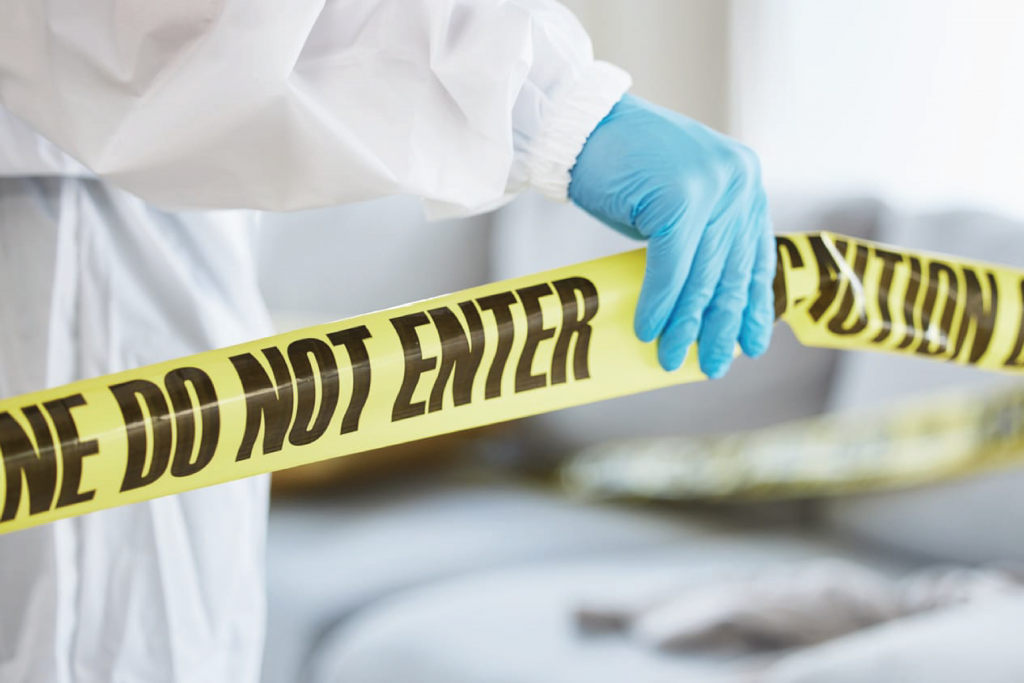
When individuals, family law attorneys, and corporate executives across New Brunswick face high-stakes disputes—whether navigating a contested child custody hearing, investigating suspected workplace fraud, or gathering critical evidence for civil litigation—the difference between speculation and a definitive legal verdict comes down to one non-negotiable factor: verifiable, court-admissible evidence. What Can a Licensed Private Investigator Legally Do in New Brunswick? Direct Answer: Legal Powers & Scope of Investigation in NB A licensed private investigator in New Brunswick operates under the provincial Private Investigators and Security Services Act, legally conducting discreet mobile surveillance, witness interviews, skip tracing, and physical evidence documentation in public spaces. In 2026, all evidentiary collection must strictly comply with Canadian privacy legislation (PIPEDA) and maintain an unbroken, time-stamped chain of custody to be admissible in the New Brunswick Court of King’s Bench. In an era where digital footprints and personal schedules are increasingly complex, relying on amateur guesswork or DIY surveillance frequently results in disaster. Under Canadian common law and statutory privacy protections, improperly gathered evidence is routinely excluded by judges—and worse, can expose the individual attempting it to criminal charges or civil lawsuits. Understanding how professional, licensed investigation works in Atlantic Canada is the first step toward securing true legal leverage. The Legal Framework: Licensing, PIPEDA & Evidence Admissibility in NB In the Province of New Brunswick, private investigation is a strictly regulated profession governed by the Department of Public Safety under the Private Investigators and Security Services Act (SNB 1973, c P-16). Anyone offering investigative services to the public must hold a valid provincial license, be fully insured, and operate within the bounds of federal and provincial privacy legislation. Private investigators are not police officers, but they possess specialized legal rights and forensic techniques to collect facts that ordinary citizens cannot legally or practically obtain: Public Domain Surveillance: Investigators can legally monitor, photograph, and video-record individuals in any public setting where there is no reasonable expectation of privacy (e.g., roadways, parking lots, parks, commercial premises). Contemporaneous Daily Logs: Under Section 30 of the Canada Evidence Act, professional investigators maintain detailed, time-stamped chronological field logs that document every minute of observation, creating a verifiable evidentiary trail that stands up to aggressive cross-examination. Chain of Custody Preservation: Digital media files must retain original EXIF metadata without alteration, with cryptographic file verification to prove that photographs and recordings have not been cropped, filtered, or generated with artificial intelligence. ⚠️ The Danger of DIY Surveillance in New Brunswick Placing GPS trackers on vehicles you do not own, installing hidden spyware on phones, or trespassing on private property violates the Criminal Code of Canada (Section 184 Interception of Communications and Section 264 Criminal Harassment). Judges in the Court of King’s Bench will not only throw out tainted evidence with prejudice, but civil courts may award punitive damages against the offending party. Core Investigative Practice Areas in New Brunswick Professional private investigation is diverse and specialized. At the Forensic & Private Investigation (St-Amand) Agency, services are anchored in over three decades of frontline forensic identification, crime scene analysis, and licensed court experience across New Brunswick: 1. Family Law, Child Custody & Domestic Investigations Domestic legal disputes are emotionally draining, but the family court system in New Brunswick evaluates cases exclusively on verifiable facts. When child custody, cohabitation status, or child welfare is in question, discreet surveillance provides impartial proof: Child Safety & Parental Fitness: Verifying whether a child is being exposed to unsafe environments, unauthorized third parties, neglect, or substance abuse during scheduled custodial access. Cohabitation & Spousal Support Defense: Documenting shared residency, economic co-dependence, and living arrangements to verify or dispute ongoing spousal maintenance obligations. Infidelity & Asset Dissipation: Documenting unfaithful behavior and tracing marital funds that have been secretly diverted into hidden accounts, trips, or undisclosed assets. 2. Corporate Fraud, Workplace Misconduct & WorkSafeNB Defense Businesses throughout Moncton, Fredericton, and Saint John face significant losses from internal misconduct. Professional investigation safeguards corporate balance sheets through targeted commercial inquiries: Disability & Workers’ Compensation Fraud: Conducting video surveillance to determine whether an employee claiming total incapacity is actively engaged in physical labour, secondary employment, or recreational activities that contradict medical claims. Internal Theft & Inventory Shrinkage: Investigating supply chain leakage, warehouse diversion, and employee collusion. Rapid Onsite Workplace Drug & Alcohol Screening: Providing immediate 10-minute on-site drug and alcohol testing for incident response, reasonable suspicion, and pre-access compliance to protect workplace health and safety (OHSA). 3. Forensic Reconstruction, Scale Diagramming & Expert Testimony Unlike standard detective agencies that focus purely on surveillance, a true forensic investigation agency provides physical evidence analysis for criminal and civil defense counsel: Accident & Crash Scene Reconstruction: Precision analysis of motor vehicle collisions, industrial machinery failures, mining incidents, and pedestrian strikes. Scale Plan Diagrams: Drafting precision, court-exhibit-ready scale diagrams of crime and collision scenes to illustrate lines of sight, skid marks, and spatial layouts for trial juries. Physical Evidence Examination: Forensic comparison of fingerprints, footprints, tool marks, and fractured physical components (plastics, metals, glass). Qualified Expert Witness Testimony: Providing sworn, court-tested expert witness testimony in both Provincial Court and the Court of King’s Bench. Comparing Investigative Approaches: Why Credentials Matter The following matrix illustrates why court-qualified forensic investigators deliver fundamentally different evidentiary outcomes compared to general operatives or amateur efforts: Evidentiary Benchmark Forensic & Private Investigation (St-Amand) General Uncertified Operative DIY / Client Self-Help Court Admissibility 100% Admissible in King’s Bench Vulnerable to exclusion challenges High risk of exclusion / contempt Expert Witness Standing Qualified in King’s Bench & Provincial Court Witness of fact only (no opinion) Biased interested party Forensic Certifications CFEI (Fire/Explosion) + FIS/E (Forensics) Basic security license only None Scale Scene Diagrams Professional scale drafting for trial exhibits Rough hand sketches (inadmissible) None Chain of Custody Strict digital forensic preservation Basic smartphone video files Easily challenged for spoliation Regional Coverage: Moncton, Fredericton, Saint John & Northern NB New Brunswick’s geography requires rapid, multi-jurisdictional mobility. An effective private investigator must understand the distinct local dynamics of each community: Greater Moncton, Dieppe & Riverview: As